

Flea and Tick Prevention in Dogs: A Complete Guide for Pet Parents
If you have ever spotted a tiny black speck moving through your dog’s fur, you probably know a flea investigation needs to begin right away. And ticks? They’re even sneakier. One tiny parasite can hitch a ride home after a walk, hide under the dog’s collar, and transmit a number of diseases.
Fortunately, flea and tick infestations are highly preventable if you have the right knowledge. This guide covers everything you need to know about flea and tick prevention in dogs to keep your dog safe and pest-free.
Why is Year-Round Flea & Tick Prevention Crucial for Dogs?
Most pet parents think that fleas and ticks are a summer problem and that their dog doesn’t need prevention in winter. But the fact is that fleas can easily survive indoors, where the temperatures are comfortable even during the colder months. They can trigger allergies, cause itching, and may even lead to conditions like hair loss and anemia. Some fleas may also transmit tapeworms in dogs.
Ticks, on the other hand, can also be active throughout the year, depending on the species and area. They can transmit diseases such as Lyme disease, ehrlichiosis, anaplasmosis, Rocky Mountain spotted fever, and babesiosis. Moreover, they can also bite humans, causing skin redness, swelling, and irritation.
That’s why veterinarians recommend keeping dogs protected throughout the year rather than starting prevention once warm weather begins. It not only helps you keep your dog comfortable but also helps protect your family and household.
How Can Dogs Get Flea & Tick Infestations?
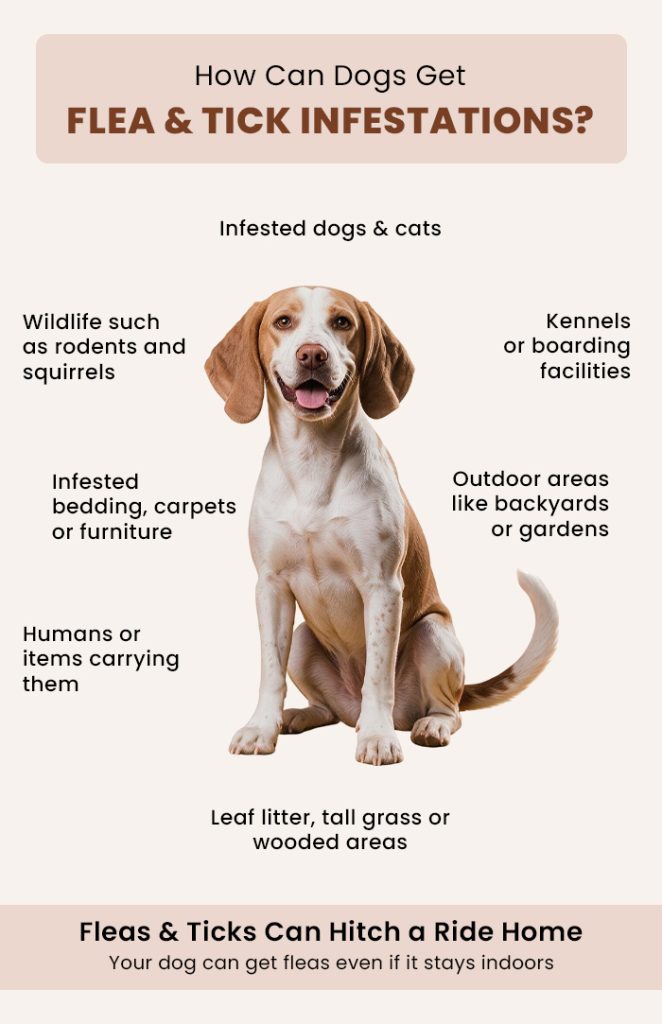
Dogs can pick up fleas and ticks from many places. Your dog doesn’t need to visit a park or hike a bushy trail to pick them up. They can easily get into your dog’s fur from:
- Infested dogs and cats
- Wildlife such as rodents and squirrels
- Infested bedding, carpets, or furniture
- Kennels or boarding facilities
- Outdoor areas like backyards or gardens
- Leaf litter, tall grass, or wooded areas
- Humans or items carrying them
And more importantly, flea eggs or larvae can also accumulate in your environment. Therefore, treating only the dog may not be enough once an infestation is established.
Types of Flea & Tick Treatments for Dogs
Flea and tick preventives come in various forms. Here are their main categories along with some top options:
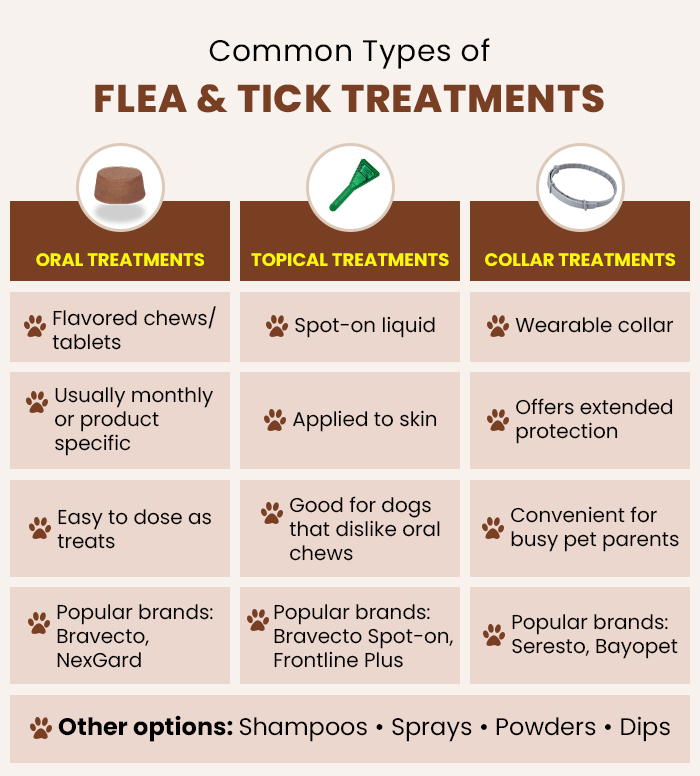
1. Oral flea & tick treatments
These are typically flavored tablets or chews given by mouth as a treat. Depending on the specific product, they can provide protection against fleas and various tick species. Some trusted options in this category include Bravecto Chews for Dogs, NexGard for Dogs, and Simparica for Dogs.
2. Topical flea & tick treatments
Topical or spot-on treatments are solutions applied directly to the skin. Depending on the active ingredient, they may kill or repel fleas and ticks and may offer protection against additional parasites. They are more convenient for dogs that dislike oral preventives. BravectoSpot-on and Frontline Plus are among the well-known brands of topical preventatives.
3. Flea & tick collars
Collar treatments are particularly convenient for pet parents who struggle to remember monthly treatments or dogs that resist topical or oral administrations. They are designed to release active ingredients gradually and can provide extended efficacy. Seresto Dog Collar is one such treatment that offers up to 8 months of flea and tick protection.
Apart from these, flea and tick shampoos, sprays, powders, and dips are also available on the market today, but they generally aren’t a substitute for an ongoing preventive treatment. Whichever treatment you choose, make sure it is specifically labeled for your dog’s age and weight, and check the label for which flea and tick species it controls.
How to Choose the Right Flea & Tick Treatment for Your Dog?
There isn’t a single “best” product when it comes to choosing a flea and tick preventive for dogs. The right choice for your dog depends on various factors:
- Age: Puppies have different safety considerations than adult dogs. The majority of products are approved only above a particular age or weight.
- Weight: Most flea and tick products come in weight-specific doses. Giving a product intended for a larger dog to a small dog can unnecessarily increase exposure.
- Lifestyle: A dog that mostly lives in the house and one that frequently travels between states may have different parasite exposure risks.
- Location: Different tick species prevail in different parts of the United States. A veterinarian can help identify the parasites that are likely to affect your dog where you live.
- Medical history: If your dog is pregnant, intended for breeding, or nursing, or has had neurological disorders, some products may not be suitable for them.
- Breed: Some products may contain active ingredients that aren’t safe for certain dog breeds, such as Collies.
Your veterinarian can help you choose the right flea and tick prevention treatment for your dog. Always read the product label carefully, including active ingredients, target parasites, minimum age and weight, dosing schedule, warnings, and directions before starting treatment.
How to Get Rid of Fleas in Your Home & Backyard?
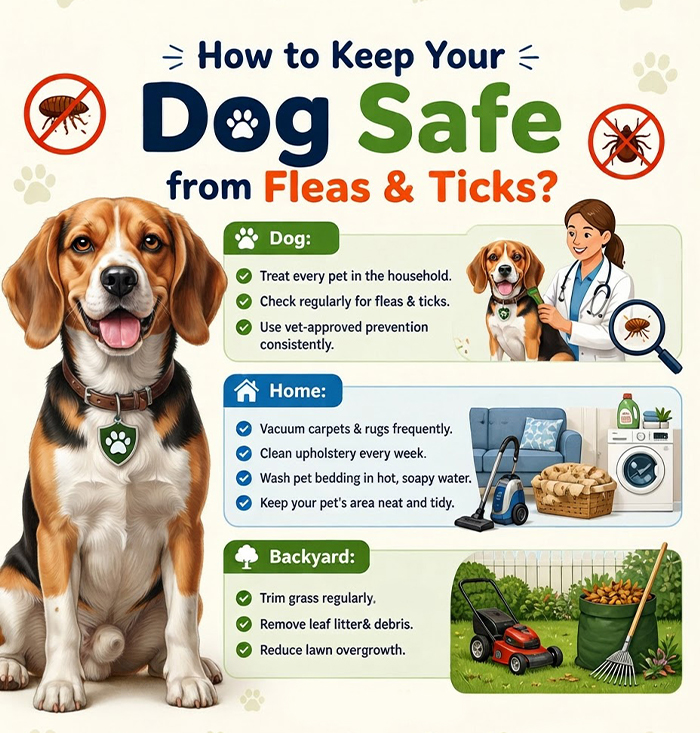
If you’ve found fleas on your dog and have treated the dog with an appropriate treatment, it’s not over. As fleas and ticks may be hiding in your home and backyard too, it is important to get rid of these pests from these areas as well, or else they can continue to multiply. These are a few things to keep in mind to get rid of fleas from your environment:
- Treat every pet in the household: Treating only the pet with visible fleas can allow the infestation to continue through untreated pets.
- Vacuum the house daily: Vacuuming the carpets, rugs, and upholstery is one of the most useful ways to manage an indoor flea infestation.
- Wash your pet’s bedding clean: Wash your pet’s bedding and fabrics regularly in hot, soapy water to kill flea eggs and larvae.
- Keep your backyard tidy: Keep grass trimmed, remove excessive leaf litter and brush, and reduce areas where ticks are likely to thrive.
Some infestations can be stubborn. When everything else fails,a professional pest control service can be your savior in addition to regular treatments.
Are Flea & Tick Treatments Safe for Puppies, Pregnant Dogs, and Lactating Dogs?
Many flea and tick treatments can be used safely for puppies, pregnant dogs, and lactating dogs, but it is important to check the safety guidelines on the product label carefully. For very young puppies who aren’t old enough for a particular preventive, your veterinarian may recommend Advantage flea treatment, which is suitable for puppies from birth along with manual removal using a flea comb or a tick remover. However, heavy flea infestations in puppies deserve prompt veterinary attention because the blood loss can cause anemia in young animals.
Are Natural Flea & Tick Prevention Methods Effective?
The short answer is not really. Although some natural approaches may help reduce exposure, they should never substitute a vet-recommended flea and tick preventive. Some natural remedies for fleas involve use of essential oils such as tea tree, eucalyptus, citrus, and other oils that can cause toxic effects in pets if not diluted properly. The use of garlic or apple cider vinegar is also considered as a repellent for some pests, but it isn’t risk-free and shouldn’t be considered a reliable replacement for a vet-recommended flea and tick preventive.
Your Takeaway:
Keeping your dog safe from fleas and ticks may demand your time and effort, but it can help save you and your dog from the repercussions caused by these tiny pests. Use an appropriate preventive consistently, check your dog for fleas and ticks regularly, and keep the home and yard clean to prevent these parasites from setting up camp. Always involve your veterinarian when choosing or changing a flea & tick product. And never forget: prevention is always better than a cure when it comes to flea and tick infestations in dogs.