

Vaccinations in Puppies and Dogs
Pet parenting comes with a list of responsibilities, but right at the top sits vaccinations. Whether you’re parenting a newborn puppy or an adult canine friend, staying updated with the right dog vaccination schedule is essential for your furry friend’s long, healthy life. This guide breaks everything down in a simple, practical way, with no confusing medical jargon, just clear answers pet parents actually need.
Why Is Vaccination Important for Dogs & Puppies?
Vaccines are a safe and economical way to protect dogs from various diseases and improve their quality of life. Here’s why dog vaccinations matter:
- Vaccination helps prevent fatal illnesses.
- It supports immunity development in puppies.
- It plays a key role in protecting other pets and humans.
- Vaccination helps avoid expensive treatments for preventable diseases.
- It is also required by law in many services, like boarding, daycare, etc.
Skipping vaccines doesn’t just risk one dog; it can put an entire animal community, as well as their families, at risk.
How Do Dog Vaccinations Work?
Vaccines are designed to train the immune system to recognize and fight harmful viruses, bacteria, and other microorganisms. Instead of causing disease, they safely expose the dog’s body to a weakened or inactive pathogen. The immune system then builds memory, so if the real disease appears, the body can respond instantly.
It is important to note that vaccines do not directly block harmful microorganisms from entering the body, so when the real pathogens invade, the dog may show mild or no symptoms, because the vaccine has already prepared the immune system to fight against them.
What Are the Common Dog Vaccinations?
Dog vaccinations fall into two main categories: core vaccines and non-core vaccines.
1. Core Vaccines
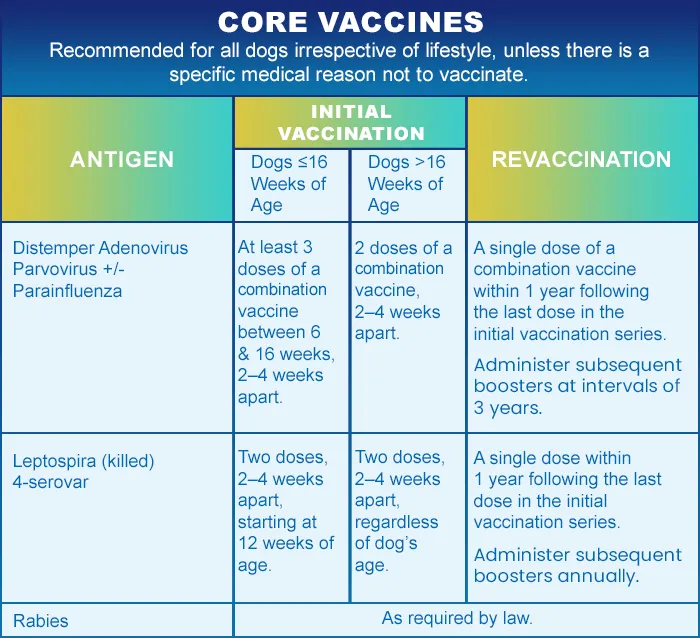
Core vaccines are essential vaccines for all dogs. This includes vaccines for rabies, parvovirus, adenovirus, Leptospira, hepatitis, etc. Core vaccines are considered non-negotiable by veterinary medical associations.
A core vaccination schedule for dogs and puppies may look like this:
2. Non-core vaccines
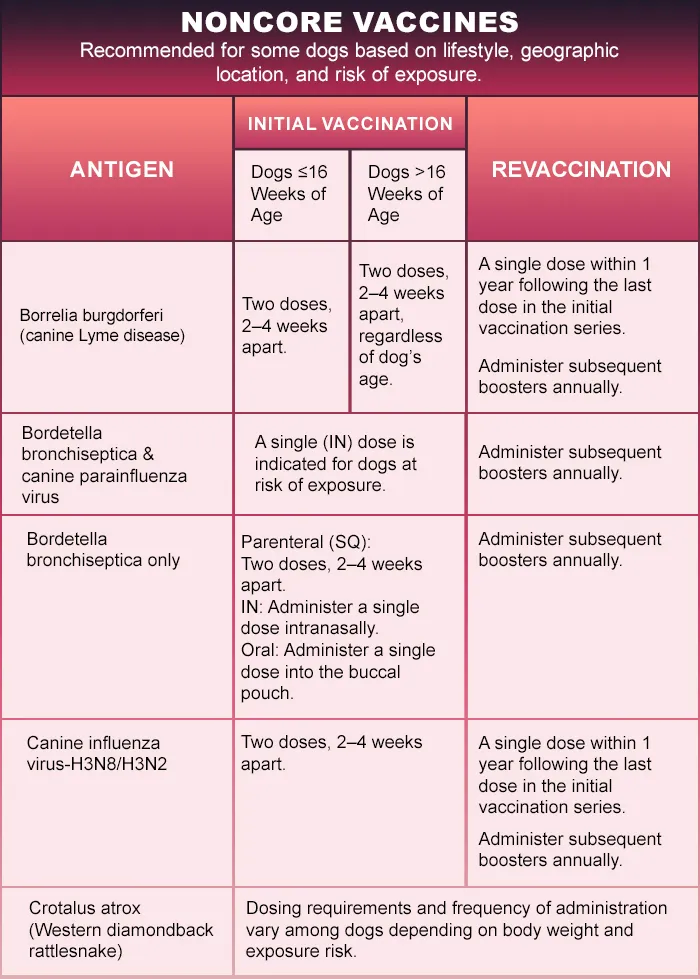
Non-core Vaccines, also known as lifestyle vaccines, are optional and are generally recommended based on the pet’s lifestyle factors. It includes Lyme vaccine, canine influenza vaccine, rattlesnake vaccine, etc.
A non-core vaccination schedule for dogs and puppies may look like this:
Dog Vaccination Schedule: What Vaccines Do Dogs Need?
All dogs should receive core vaccines and be evaluated for the requirement of any non-core or risk-based vaccines by a certified veterinary professional. Vaccination needs can vary from one dog to another, which is why a personalised schedule is always best.
Here are some of the factors that may influence your dog’s vaccination needs:
- Indoor vs. outdoor lifestyle
- Travel frequency
- Regional infection risks
- Requirements of daycare or boarding
- Exposure to wilderness
- Exposure to other dogs
- Existing immune status or health conditions
- Overall health of your pet
Your veterinarian will use these factors to determine the most appropriate vaccine plan for your pet.
Puppy Vaccination Schedule
Puppies are especially vulnerable to infectious diseases during the first few months of life, which is why early vaccination is so important. A puppy vaccination schedule usually begins at 6–8 weeks of age and continues every 2–4 weeks until around 16 weeks of age. This staged approach helps build strong immunity during early development.
This puppy vaccination schedule outlines when your puppy should receive essential vaccines to stay protected during early development:
- Between 6-16 weeks: First core vaccine dose (commonly distemper, adenovirus, parvovirus)
- Starting at 12 weeks: Second core vaccine dose and leptospira
- Between 14–16 weeks: Final puppy booster dose and rabies vaccine (as required by law)
- After 16 weeks: Assessment for any non-core vaccines such as Bordetella, canine influenza, or Lyme disease
Although this is the standard puppy shots timeline, your veterinarian may adjust it based on your puppy’s individual health risks, state laws, etc.
Adult Dog Vaccination Schedule
Once the first-year series is complete, adult dogs need core vaccines every 1–3 years. Your veterinarian may also recommend regular booster vaccines to help keep your dog’s immunity strong over time. In general:
- Core combination vaccines are often boosted every 1–3 years
- Rabies boosters depend on local laws and vaccine type
- Some non-core vaccines may require annual boosters
- Non-core vaccines are given only when an ongoing risk exists
Keeping up with your dog’s vaccine schedule is the best way to protect your dog from diseases like rabies, hepatitis, distemper, Bordetella, and more.
Are Dog Vaccines Safe?
The short answer is yes. Vaccines are rigorously tested and widely recommended by veterinary medical authorities. However, as with any other medical treatment, mild reactions like discomfort, swelling, low energy, etc., may be possible after vaccination; the benefits far outweigh the risks. Serious side effects are rare. Vaccines are said to have saved more animal lives than any other medical intervention in history, and they are far better than expensive, complicated, and stressful treatments.
What Should You Watch Out for After Your Pet’s Vaccination?
While mild reactions after vaccination are normal for a few hours after vaccination, you must watch out for the following signs of adverse reactions:
- Slight fever
- Low energy
- Mild swelling at the injection site
Call a vet if you notice:
- Vomiting or diarrhea
- Facial swelling
- Difficulty breathing
Monitoring for side effects of dog vaccines is important, especially within 24 hours. If any of these symptoms persist, seek veterinary care immediately.
What are the Risks of Not Vaccinating Dogs?
Skipping vaccines can pose a serious health risk for your dog. These risks include:
- Life-threatening infections
- Expensive treatments
- Pain and suffering
- Weakened immune system
- Risk to humans (zoonotic diseases)
- Travel restrictions
- Service restrictions (boarding, grooming, etc)
- Legal consequences
In certain cases, not getting your dog vaccinated (for example, with the rabies vaccine) can result in fines, strict quarantines, or even euthanasia to test for the virus.
How to Prepare Your Puppy for Vaccination?
Here are a few things to keep in mind while preparing your puppy for a smooth vaccination visit:
- Keep the puppy calm and well-rested.
- Carry your puppy’s favorite treats or toys.
- Avoid feeding heavy meals before the visit.
- Use a comfortable and clean carrier for transport.
- Stay relaxed, as puppies mirror our emotional state.
After the visit, make sure the puppy gets proper rest and hydration. Sometimes, puppies may have a slight bump at the vaccination site. Ask your veterinarian to recommend the proper aftercare steps. It is also important to monitor them for unusual reactions like severe itching, hives, or vomiting, and consult your vet if these occur.
Final Thoughts
Following a proper dog vaccine schedule is one of the simplest ways to protect a pet’s health long-term. From the first puppy shots timeline to adult boosters, every step plays a role in preventing serious disease. When it comes to dog vaccinations, staying informed, consistent, and proactive makes all the difference because prevention will always be easier than a cure. Most importantly, always consult a licensed veterinarian to determine the most appropriate vaccination schedule for your dog.
Frequently Asked Questions:
Provide a quiet space, fresh water, and gentle care to your dog after vaccination. Monitor their body temperature and watch out for any unusual reactions. Avoiding intense activity for 24 hours also helps with a faster recovery.
Mild symptoms like tiredness or a slight fever are normal. These are signs that the dog’s immune system is responding to the vaccine. However, if you notice any adverse reactions like vomiting, diarrhea, high fever, etc., take your dog to a veterinarian immediately.
The frequency of dog vaccination depends on the types and number of vaccines recommended:
Puppies: every few weeks until 16 weeks
Adults: every 1–3 years, depending on vaccine
Yes, mild reactions like swelling or lethargy may occur, but severe reactions are uncommon.
The age of 6–8 weeks marks the start of the puppy vaccination schedule.
It is important to provide proper rest to your puppy and keep them under observation for at least 24 hours before taking them out.
Yes. Older dogs still benefit from vaccines, especially if their immunity has declined. Your veterinarian will conduct a full health examination of your senior dog to ensure the dog is healthy enough for the vaccination procedure.